
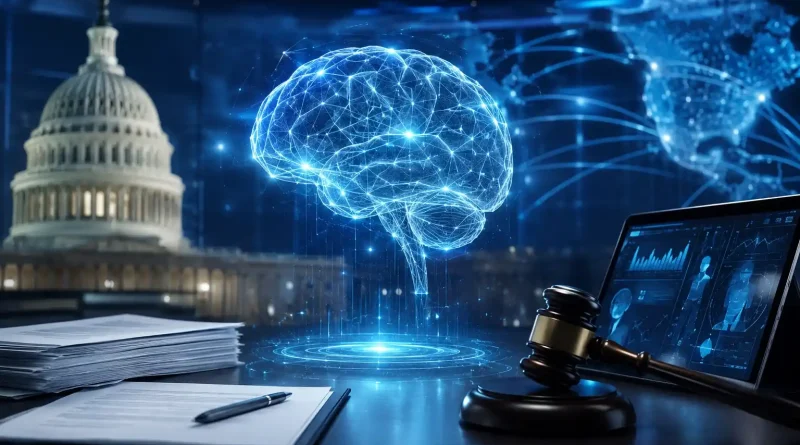
AI Regulation Debate Grows as Countries Consider How Much Oversight Is Needed
Artificial intelligence is developing rapidly, and the debate around AI regulation is becoming increasingly important. Governments, technology companies and researchers are discussing how artificial intelligence should be developed while protecting users and encouraging innovation.
The discussion is not simply about creating more rules. It is also about deciding which areas of AI require oversight and how regulations can keep pace with rapidly changing technology.
Why AI Regulation Matters
AI systems are being used across business, education, healthcare, software development, customer service and many other areas.
As these systems become more capable, questions about privacy, security, accuracy, transparency and accountability become more important.
Balancing Innovation and Safety
One of the biggest challenges is finding a balance between innovation and safety.
Technology companies want to develop new AI products quickly, while governments and researchers are concerned about potential risks. Excessive regulation could slow useful development, while limited oversight could leave important risks unaddressed.
The Global Discussion
Different countries are approaching AI regulation in different ways.
Some governments are focusing on risk based frameworks, while others are encouraging voluntary standards and industry cooperation.
The differences between regulatory approaches could become increasingly important as AI products operate across international markets.
The Role of Technology Companies
Technology companies also have an important role in responsible AI development.
Companies can improve testing, security, transparency and human oversight while developing new systems. Responsible development can help build public confidence in AI.
What Users Should Expect
For everyday users, better AI governance could mean clearer information about how systems work, stronger privacy protections and improved safeguards.
However, regulation cannot eliminate every risk. Users will still need to understand the limitations of AI generated information.
What Comes Next
The AI regulation debate is likely to continue as the technology becomes more deeply integrated into everyday life.
The challenge will be creating practical frameworks that protect people without preventing useful innovation.
Conclusion
AI regulation is becoming an important part of the technology discussion in 2026.
The future of artificial intelligence will depend not only on how powerful the technology becomes, but also on how responsibly companies, governments and users choose to develop and use it.